Technological advances are revolutionizing the field of medicine, and artificial intelligence (AI) has proven to be a key tool in the early detection of breast cancer . According to a study published in JAMA Network Open , AI algorithms can identify signs of the disease with impressive accuracy, even five years before it becomes clinically apparent.
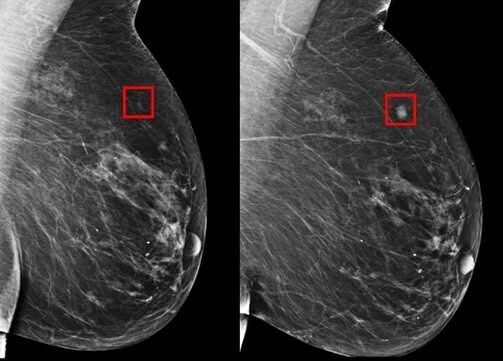
This discovery represents a significant advance in the fight against cancer , as detecting the disease in its early stages significantly increases the chances of successful treatment and a better quality of life for patients.
The technology behind this innovation is based on the analysis of thousands of mammograms , where AI is able to identify subtle patterns that might otherwise go unnoticed by the human eye. From alterations in the texture of breast tissue to almost imperceptible microcalcifications, these algorithms can assess the future risk of developing the disease with surprising accuracy.
One of the study’s highlights is that AI not only detects existing tumors, but can also predict a person’s likelihood of developing malignant cells years in advance . This is possible thanks to its ability to analyze large volumes of data and find correlations that traditional medicine has not yet fully deciphered.
Deep learning , a type of artificial intelligence based on neural networks, allows systems to continuously improve their accuracy as they analyze more information. This allows AI to detect anomalies in mammographic images with a level of detail that surpasses even some of the best specialists in the field.
Despite its impressive capabilities, experts emphasize that this technology does not seek to replace radiologists, but rather to complement them. The combination of human knowledge with the analytical power of AI allows for faster and more accurate diagnoses, reducing the workload of healthcare professionals and ensuring that the most urgent cases receive the necessary attention.
A key benefit of AI in breast cancer detection is the reduction of false negatives , i.e., cases where the disease goes undetected during initial screenings. By identifying early signs that were previously difficult to detect, treatment delays can be avoided and patient outcomes significantly improved.
Another important advantage is that this technology allows for long-term monitoring. By analyzing the evolution of breast tissue during periodic examinations, AI can alert you to minor changes that, while not immediately apparent, could indicate an increased risk of developing cancer in the future.
The future of artificial intelligence in cancer medicine is promising. With its implementation in more hospitals and healthcare centers, early detection of breast cancer is expected to become a global standard, saving countless lives and optimizing healthcare system resources.
As this technology is refined, experts suggest it could be applied to other types of cancer, improving diagnostic accuracy and enabling more timely interventions. However, they also emphasize the need for continued research and refinement of AI models to ensure their effectiveness in different populations and clinical settings.
In short, artificial intelligence is establishing itself as a fundamental ally in the fight against breast cancer . Its ability to detect the disease years in advance represents invaluable hope for millions of people around the world, marking a turning point in the way we confront this disease.