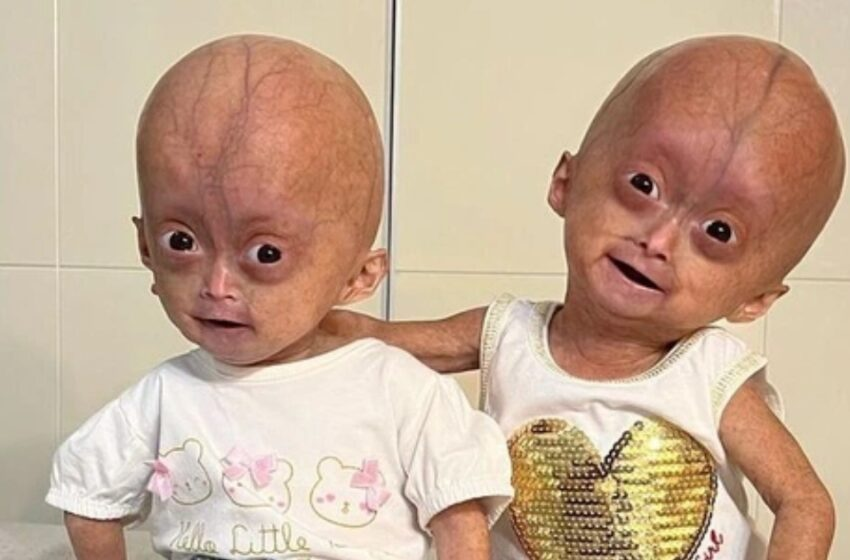
In a small Brazilian village, identical twins Elis and Eloá have become symbols of resilience and the extraordinary human spirit. Born with Hutchinson-Gilford Progeria Syndrome (HGPS), a rare and fatal genetic disorder that accelerates aging, these twins are navigating their challenging journey with grace and strength, inspiring many around the world.
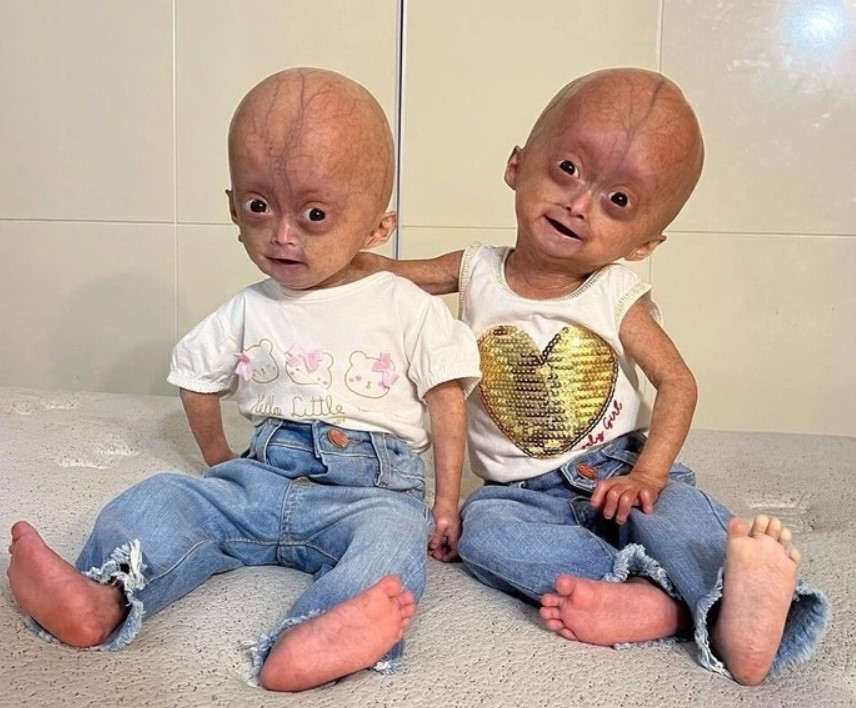
HGPS is an exceptionally rare disorder that affects approximately 1 in 20 million newborns worldwide. It is characterized by rapid aging that begins in early childhood, resulting in growth delays, loss of body fat and hair, aged-appearing skin, joint stiffness, and serious cardiovascular problems. The average life expectancy for people with HGPS is around 14.5 years, although some may live into their late teens or early twenties. This syndrome gained public attention through the film “The Curious Case of Benjamin Button.” The condition is caused by a mutation in the LMNA gene, responsible for producing lamin A, a protein crucial for maintaining the structural integrity of the cell nucleus. The mutation results in an abnormal protein, progerin, which destabilizes cells and causes premature cell death.

Elis and Eloá quickly attracted attention due to their unique medical condition. Despite the physical challenges presented by Progeria, their contagious smiles and unwavering optimism have become a source of hope and inspiration. Their parents, Guilherme and Elismar, have dedicated their lives to providing the best possible care for their daughters, ensuring they live as normal a life as possible despite the limitations of their condition. The family’s path has not been easy. Daily life involves rigorous medical care routines, including physical therapy, to manage joint stiffness and maintain mobility. However, Elis and Eloá face each day with remarkable courage and a truly extraordinary zest for life.
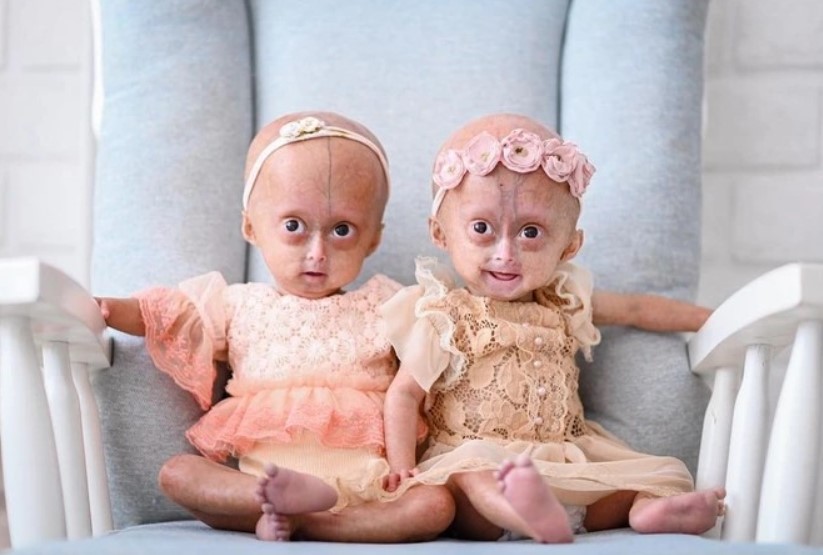
Their story has resonated globally, leading to widespread support from individuals and organizations dedicated to raising awareness about Progeria and supporting research efforts. The Progeria Research Foundation has been instrumental in advancing research and providing resources to families affected by the condition. Through social media platforms, the twins’ journey is shared with a wide audience, fostering a sense of community and solidarity. Updates from their family, documenting both the highs and lows of their daily lives, offer invaluable insights into the realities of living with Progeria while conveying a message of hope and perseverance. In recent years, significant progress has been made in the understanding and treatment of Progeria. In 2020, the U.S. Food and Drug Administration (FDA) approved the first treatment for Progeria, a drug called lonafarnib. This drug has been shown to prolong the lives of children with Progeria by reducing the buildup of progerin in cells, thereby slowing the progression of the disease.

Although there is still no cure, ongoing research offers hope. Scientists are exploring gene-editing techniques, such as CRISPR, as possible avenues to correct the genetic mutation at the source. For families like Elis and Eloá, these advances offer a glimmer of hope for the future. Elis and Eloá exemplify the extraordinary resilience of the human spirit. Their story reminds us of the power of love, community, and scientific advancement in the face of seemingly insurmountable challenges. As they continue to defy the odds, they inspire countless individuals around the world to cherish every moment and never lose hope, no matter how daunting the obstacles may seem.